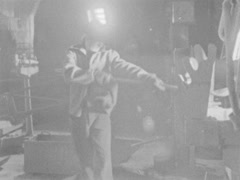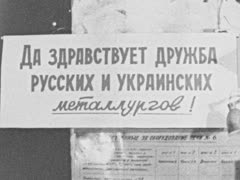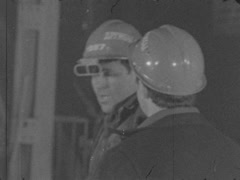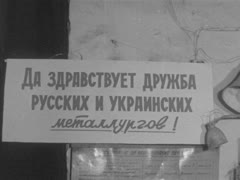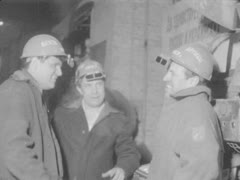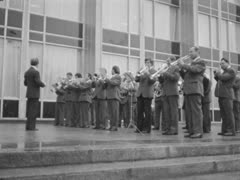
Opening of the "Zhovtnevyi" Palace of Culture
- ID: 65584
- Place: Zaporizhzhia
The collection consists of seventy-seven films shot between 1961 and 1987 on 16-mm film by the film studio of the Zaporizhzhia Electrometallurgical Plant "Dniprospetsstal" named after A. M. Kuzmin, which had existed since the late 1950s under the leadership of Ivan Stepanovich Rohalev. Ivan Stepanovich, a professional photographer, joined the plant in 1948 and established a photo lab to document production processes. He kept a photographic chronicle of the reconstruction, documenting the ruins and restoration of the workshops destroyed during World War II. He filmed using a movie camera that had been purchased for family use. In 1957, he compiled his first documentary film, "Second Birth," from various film footage, which he screened in the workshops, dormitories, and open areas of the factory buildings. Eventually, the plant’s management took notice of his work and sent him for an internship at what was then the best amateur film studio at the Kharkiv Electromechanical Plant. Upon his return, Ivan Rohalev brought P.O. Kosa, S.P. Ivanov, M.S. Vulfovich, F.V. Dombrovsky, and P.P. Deyenkov into the "Dniprospetsstal" studio.
The studio’s films depict life in industrial Zaporizhzhia during the Soviet era and cover industrial, social, and political themes. Films on industrial themes predominantly feature scenes of ferrous metallurgy and energy enterprises; production processes in workshops; the construction of new buildings; and the landscaping of factory grounds.
Films with social and everyday themes depict moments of leisure, travel, and family vacations at health resorts for workers; celebrations and ceremonies, cultural events, and the activities of amateur creative groups; and the development of residential areas. A separate theme is the social roles of Soviet women—as students, workers, wives, and homemakers.
Scenes from films with political themes are usually part of newsreels.
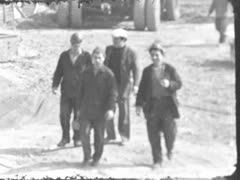
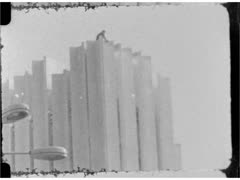
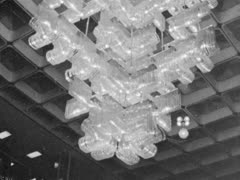
They are dedicated to events within the framework of communist ideology: socialist competitions and the recognition of top workers; competitions between "Dniprospetsstal" and the plants in Novokuznetsk and Elektrostal; visits from the relevant ministry; ceremonial gatherings, rallies, and demonstrations; friendly competitions; community work days; the development of subsidiary farms; and civil defence training. Some of the films document the construction and opening of the "Zhovtnevy" Palace of Culture, which became a centre for ideological and educational work and a venue for mass gatherings.
Some of the films depict the honouring of veterans and the education of new generations to commemorate the Red Army’s heroic deeds during World War II. In one of the films, which covers the proceedings of a workers’ tribunal, photographic chronicles of Nazi Germany’s crimes are equated with workers’ violations of their socialist obligations.
Among the factory film studio’s body of work featured in the collection, it is worth highlighting a comedic sketch, as well as films and fragments created using experimental techniques such as stop-motion animation and poster films.
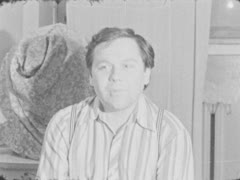
A few film reels contain footage of the factory film studio’s work featuring Ivan Rohalev on screen.
The collection includes footage from the following cities: Zaporizhzhia, Novokuznetsk, Gaspra, Alupka, Kyiv, the Carpathians, Lviv, Khortytsia, Berlin, Weimar, Moscow, and Elektrostal.
The plots and locations of the collection’s films are presented based on descriptions provided by the museum’s director, Iurii Rylskii.
The films were submitted for digitisation by the Museum of PJSC "Dniprospetsstal" as part of the project "Safeguarding Ukrainian Heritage of Amateur Films and Home Movies," implemented with support from The Modern Endangered Archives Program.