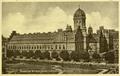
Former Greek-orthodox Seminary Building with Seminary Church
The postcard shows a part of the building of the Residence of the Greek-Orthodox Bishop in Chernivtsi. From 1873 on he was the Metropolitan of the Bukowina and…
Read more


The postcard shows a part of the building of the Residence of the Greek-Orthodox Bishop in Chernivtsi. From 1873 on he was the Metropolitan of the Bukowina and…
Read more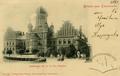
The postcard shows a part of the building of the Residence of the Greek-Orthodox Bishop in Chernivtsi. From 1873 on he was the Metropolitan of the Bukowina and…
Read more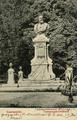
The postcard shows the monument for the Reichratsabgeordneten (Deputy to the Austrian parliament in Vienna) Konstantin Tomaszczuk (1840–1889). He was the…
Read more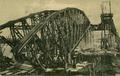
The postcard shows the railway bridge crossing the river Pruth in Chernivtsi. It was built in 1908. During the First World War Chernivtsi was occupied by…
Read more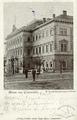
The postcard shows the building of the Landesregierung of the Bukowina (Government of the Bukowina), built in 1871-73 by the architect Gustav Fritsch in a…
Read more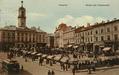
The postcars shows the Ringplatz (after the Polish “Rynek”) in Chernivtsi, called Piata Unirii in the Romanian times, Red Square in Soviet times and Central…
Read more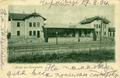
In 1866 the railway line from Lviv (Lemberg), the capital of Galizien, to Chernivtsi was opened and extended to Suczawa in 1869. Then a small station was built…
Read more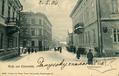
The postcard shows a part of the Landhausgasse, a street leading eastwards from the Hauptstrasse (main street) to the Russische Gasse. The street to the right…
Read more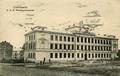
The first Staatsgymnasium was opened in Chernivtsi in 1808. In 1896 a second Staatsgymnasium was opened in Pater Eberhard Gasse behind the Jesuit Church. It…
Read more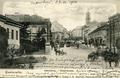
The postcard shows the Heiligenkreuzplatz and the upper part of Enzenberg Hauptstrasse. The square is named after the cross (left side of postcard), errected…
Read more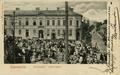
The square then called Mehlplatz (Flour square) was renamed Rudolfsplatz in 1880 after Archduke Rudolf, the heir to the Habsburg throne. The reason for this…
Read more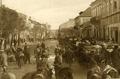
The picture presents a view of the northern side of the Rynok (“Market”) Square – the so-called Rynok A. The large numbers of people in the square, as well as…
Read more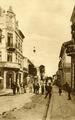
Ulanów Krechowieckich (“Krechów Uhlans”) Street was the name of today’s Zolota (“Golden”) Street in Brody in the interwar period. Named in honor of the Polish…
Read more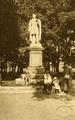
Józef Korzeniowski (1797-1863) was a famous Polish writer, playwright, and teacher hailing from Brody. Author of dozens of plays, stories and novels, of which…
Read more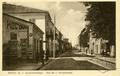
The picture presents a fragment of one of the central streets of Brody – J. Korzeniowskiego street (the street’s oldest known name was Kościelna (“Church”); it…
Read more