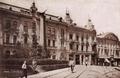
View of the Street with Soldier’s Monument
The photo for this postcard was taken from Siebenbürgerstrasse (Str. Stefan cel Mare, vul. Holovna) towards Rathausstrasse (Str. Regina Maria, vul.…
Read more
The photo for this postcard was taken from Siebenbürgerstrasse (Str. Stefan cel Mare, vul. Holovna) towards Rathausstrasse (Str. Regina Maria, vul.…
Read more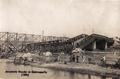
The postcard shows the destroyed bridge for pedestrians and individual transportation. The first wooden bridge across the Pruth was built in 1835, replaced by…
Read more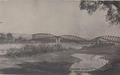
The photo shows the railway bridge crossing the river Pruth in Chernivtsi. It was built in 1908. During the First World War Chernivtsi was occupied by Russia…
Read more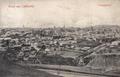
Panoramic view of Chernivtsi from the Northeast, most likely the photo was taken from the Weinberggasse. In front and to the right the older parts of the city…
Read more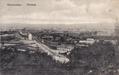
Panoramic view of the valley of the river Pruth looking towars the northwest. The photo was most likely taken from the elevated Franzensgasse or Franzenssteg.…
Read more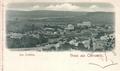
Panoramic view of the valley of the river Pruth in Chernivtsi (Czernowitz) looking towars the northeast. The photo was taken from an elevated point in or…
Read more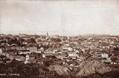
Panoramic view of Chernivtsi from the Northeast, most likely the photo was taken from the Weinberggasse. In front and to the right the older parts of the city…
Read more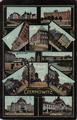
The postcard shows various important buidings in Chernivtsi (Czernowitz) on the eve of the first world war, when the city was the capital of the Bukowina, the…
Read more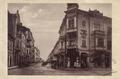
The postcard shows Ivan Franko Street (Strada Constantin Brancoveanu in Romanian, Liliengasse in Austrian times) at the corner of Mickiewicz Street (one of the…
Read more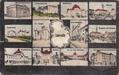
The postcard shows various important buidings in Chernivtsi (Czernowitz) on the eve of the first world war, when the city was the capital of the Bukowina, the…
Read more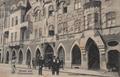
From an ethnic point of view, Chernivtsi was the most ‘mixed' of all provincial capitals of the Habsburg Empire. In 1910 out of a total population of 90.000…
Read more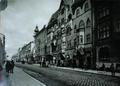
From an ethnic point of view, Chernivtsi was the most ‘mixed' of all provincial capitals of the Habsburg Empire. In 1910 out of a total population of 90.000…
Read more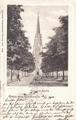
The postcards shows the Roman Catholic Herz Jesu Kirche (Church of the Heart of Jesus) built between 1891 and 1894 on Ferdinandsplatz (Shevchenko Street). The…
Read more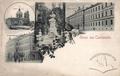
The postcards shows four pictures of Chernivtsi: the orthodox Paraskeva Church (Paraskiva Kirche) on the Main Street, the first orthodox Church in Chernivtsi…
Read more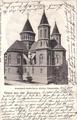
The postcards shows the church of the Armenian Catholics, located at the corner of Armenian Street (Armeniergasse) and vul. Ukrainska (Dr. Reiss Gasse). It was…
Read more