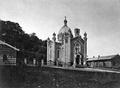
Chapel
On the western side of the Les Invalides in 1858–1863, the architect Theophilus Hansen built a chapel in the shape of a Greek cross; it was decorated with…
Read more
On the western side of the Les Invalides in 1858–1863, the architect Theophilus Hansen built a chapel in the shape of a Greek cross; it was decorated with…
Read more
The Military Invalids House (now at 35 Kleparivska St.) was built in the Pilichowska Valley of Lviv’s Klepariv district in 1855-1863 following a project by…
Read more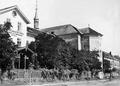
The St. Theresa Institution, founded in 1860, joined several charity institutions led by the Nuns of the Order of the Divine Providence, including a women’s…
Read more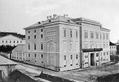
Palace of the Roman-Catholic archbishops, built in 1844 by architect Johann Saltzmann on the Góra Strzelnicza hill rising above the Wały Gubernatorskie park.…
Read more
At the turn of the 18th–19th centuries, the development of the so-called Komorowszchyna began in the eastern part of Lviv. In 1816–1820, a city square was…
Read more
The original wooden church of the Discalced Carmelites of St. Martin in the northern part of Lviv was founded around 1630 by Alexander Zborovsky. A hospital…
Read more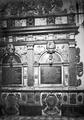
The Campian family chapel, built into the northern side of the Latin Cathedral, is the most beautiful and valuable chapel of the Lviv Cathedral, richly…
Read more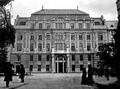
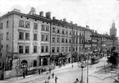
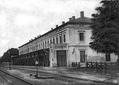
The Pidzamche railway station is located in the northern part of the city on Zhovkivska Street, partly on the lands of the ancient Paparivka cemetery. The…
Read more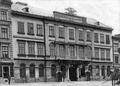
In 1839, the General Military Command was located in the private house of the merchant Glikselli at 6 Bernardynska Square (now Soborna Square), built by the…
Read more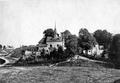
The original wooden church on this site was built in 1607 at the expense of the burgher Petro Moskalyk. ! In 1703, missionaries built a brick building; during…
Read more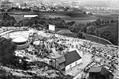
Between the High Castle and the Kaiserwald rises the Sand Mountain (Lion Mountain, Lion Mountain, Bald Mountain, Stephen's Mountain - 398 m above sea level).…
Read more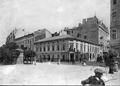
The house of Helena Budzynovskaya on Academic Street.
Read more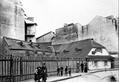
Well-known since 1825, Riznytska (Nalivayka) Street was inhabited mainly by Jewish artisans and merchants. At the beginning of the 19th century, the famous…
Read more